Klevgrand Speldosa Review: A Music Box Plugin That Belongs on Real Tracks
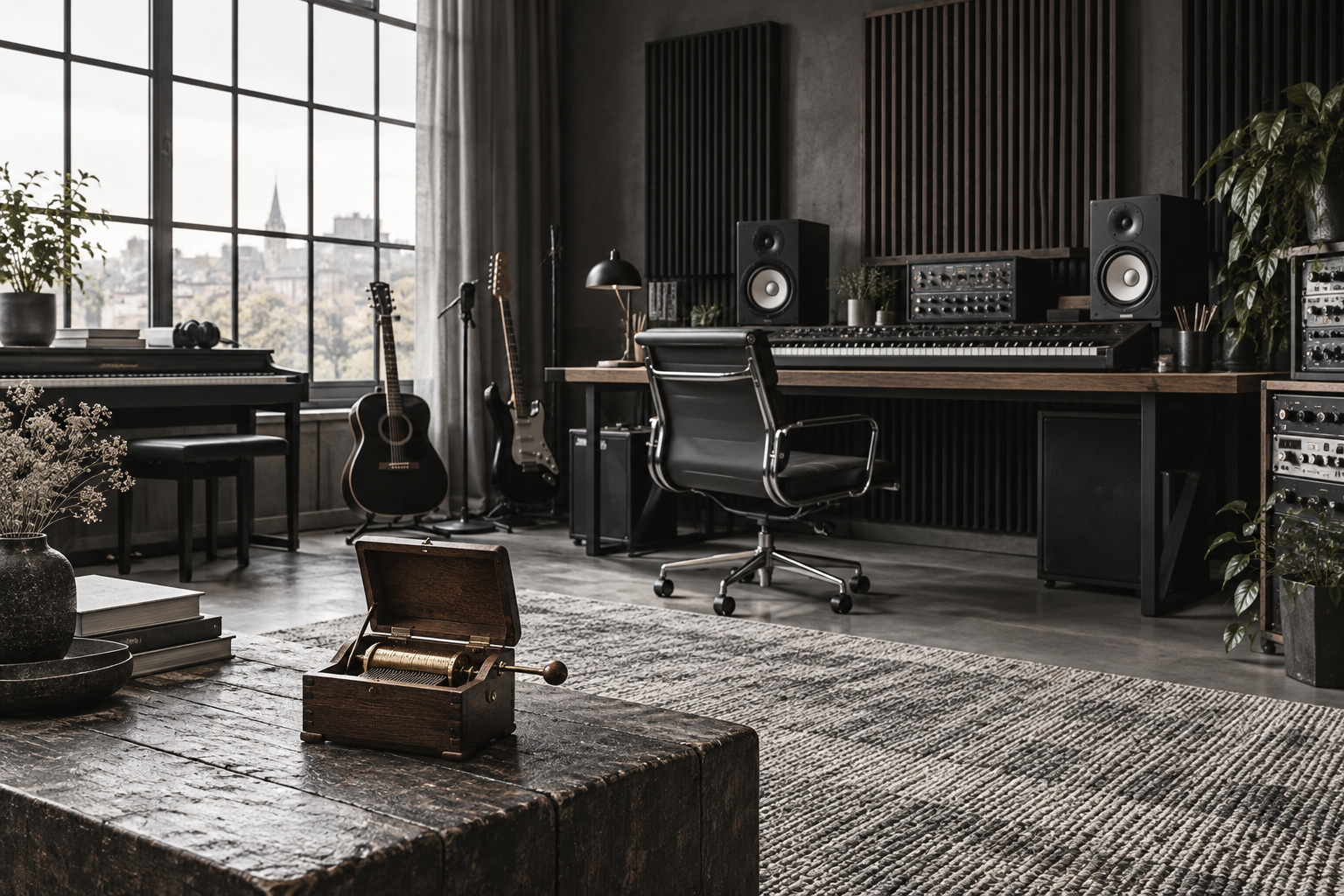
Speldosa is Klevgrand’s take on a music box, and it does one thing. There is no filter section, no modulation matrix, no reverb tail to dial in. You get a physically modelled set of tines that sound like a real clockwork mechanism, a handful of controls that decide how hard it is struck and how the resonance behaves, and that is the whole instrument. Whether that earns a place in your plugin folder depends entirely on whether you write music that needs a brittle, high, mechanical bell sound sitting somewhere in the arrangement.
I’ve had it open on enough sessions now to know where it works and where it’s a novelty. Here’s the split.
What it actually is, and what it isn’t
This is not a rompler with a “Music Box” patch buried in a preset list. Klevgrand built it as a physical model, which means the character changes as you play harder or softer rather than crossfading between sampled velocity layers. That matters for this specific sound. A real music box tine doesn’t just get louder when the comb is plucked harder, it gets slightly sharper and more metallic, and the model reproduces that behaviour in a way that a two-layer sample set never does.
The control set is deliberately small. You’re adjusting the strike and the way the resonance rings out, not sculpting a synth patch. If you open it expecting to build a pad from it you’ll be disappointed within thirty seconds. If you open it wanting a convincing mechanical bell that sits in a mix without ten minutes of EQ, you’ll get there fast.
What it does not do: it won’t give you a full chromatic instrument that sounds natural across six octaves, because a real music box doesn’t either. The low register is where the illusion thins out. Play it down around the bottom of the keyboard and the tines start to sound like a synthetic mallet rather than a mechanism. Keep it in its upper home and it’s convincing.
Where it lands in a real arrangement
The mistake people make with a plugin like this is treating it as a lead. It isn’t one. A music box is a texture instrument, and Speldosa is at its best when it’s doing texture work.
Three places it has genuinely paid off for me:
- Counter-melody against a vocal. High, sparse, panned wide. Because the tines decay quickly and don’t overlap much, it never fights a lead vocal for space in the way a sustained pad would.
- Rhythmic punctuation. Programmed as sixteenth or eighth note figures under a slow chord progression, it reads as clockwork. The instrument exists for exactly that reason, and the model sells it.
- Intro and breakdown material. A single line of it before the drums come in does more emotional work than a filtered pad sweep, and it takes about two minutes to program.
The exception, and this is worth flagging before you buy, is anything that needs sustain. This instrument is percussive by nature. If you want a bell that rings for eight seconds and swells, reach for a mallet library or a real bell synth. Speldosa will not do that job and shouldn’t be asked to.
The processing side, briefly
You don’t need much on it. A high-pass to clean up the sub-100Hz mud that any bell-like source generates is sensible, and a touch of plate or room reverb helps it sit in a mix rather than poking out dry. That’s about it. Resist the urge to saturate it heavily, because the tine character is already bright and thin and heavy saturation turns it into a harsh, fizzy mess fast. If you do want to add weight, a gentle low shelf or a parallel low-passed copy underneath can give it a body it doesn’t naturally have, but keep it subtle.
One thing I’d flag: because the sound is so distinctive, it’s very easy to overuse. Stick it on every track and the record starts to sound like a novelty album. One or two appearances per project is usually the right dose.
Does the model hold up to real music box recordings?
Reasonably. If you A/B it against a genuine recording of a comb music box, the attack is a little cleaner and the noise floor is obviously absent, but most listeners won’t clock the difference in a mix. The one giveaway is the lack of the little mechanical clicks and the ambient room the real object sits in. Speldosa doesn’t model the wooden box itself, so it sounds like the comb floating in air rather than resonating in a case. A short room reverb closes most of that gap.
If you’re scoring something that needs absolute authenticity, record a real music box or hunt down a high quality sampled library. If you need the character for a track and you want to program it rather than perform it, the model is more than good enough.
Price and whether to buy
Speldosa sits in Klevgrand’s lower price bracket, and it goes on sale regularly. At full price it’s a considered purchase for a single-sound instrument, but it’s the kind of tool you keep installed because the moment you need it, nothing else sounds like it. If you already own a broad mallet library you may not need it. If you write pop, indie, or anything with a wistful or oddball streak, it’ll get used.
The honest trade-off is specialisation. You’re paying for one sound done properly rather than a hundred sounds done adequately. That’s the right call for a plugin like this, and it’s why I keep reaching for it rather than opening a sampler and scrolling through bell presets. The question isn’t whether the plugin is good. It’s whether your music has a gap shaped like a music box. If it does, this fills it cleanly.