NOMN’s Tokyo-made bubble synth and spatial tools are worth a look
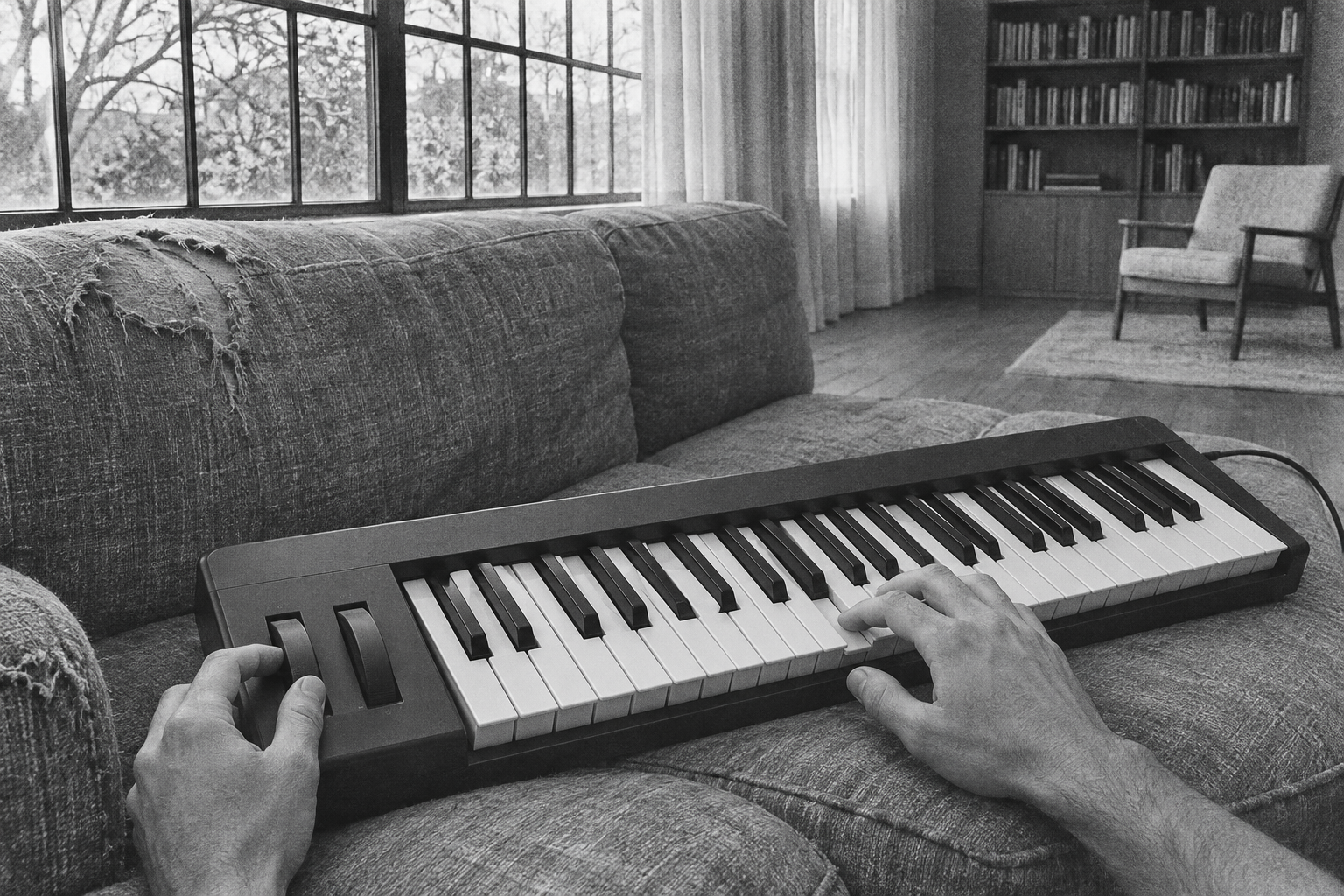
NOMN is a small Tokyo studio that builds instruments and effects with a pronounced taste for spatial movement and unstable, bubbling textures. You won’t find the usual wavetable-oscillator-filter-ADSR layout in their catalog. The tools are odd on purpose, and that is exactly why they are interesting.
I went through their lineup expecting gimmicks. A few of these do one narrow thing, and they do it well enough that I keep them around. What follows is a hands-on read of what each piece actually does in a session, where I’d reach for it, and where it falls down.
The bubble synth: genesis through modulation
Their synth leans on the same broad lineage as the “Seeds” engine that showed up on the Waldorf Iridium desktop: wavetable-style motion, but with the synthesis method free to change at each stage. The practical result is a sequence of distinct colors as the table unfolds, instead of one static spectrum swept by an LFO.
That architecture suits two jobs. It handles ambient beds and evolving sound design because the sound keeps moving without you automating much. It also covers certain virtual-analog polyphonic sounds, though I’ll be blunt: it does not have the thickness or organic drift of true polyphonic analog, and it lacks the punch of a good monosynth. If you want that low-mid weight and bite, this is not the bubble synth’s territory.
The bubbling comes from how you route movement. The instrument rewards short modulation gestures, small amounts of random, and letting the engine do the evolving rather than drawing a long envelope. Feed it a long reverb tail and it sits beautifully behind a lead. Push it into a bass role and it can feel thin. That is a real limitation, not a subtle one. It’s a texture instrument first.
On the review floor, the crystal-clear and precisely detailed character reported from the Iridium’s evolving textures carries over conceptually here. The top end stays clean, which makes it easy to layer with dirtier sources. When I stack it with a saturated sub, the bubble synth provides the air and motion while the low layer does the weight.
Spatial tools that actually place sound
The spatial side of the catalog is the part I use most. The strongest concept here is true psychoacoustic 3D positioning via crosstalk cancellation, the same principle behind Transpanner’s behind-the-listener trick. Instead of panning objects around a flat field, you can put a sound behind the head.
In a normal stereo mix that means one thing: it makes elements feel like they’re outside the speakers. Use it sparingly. A single reversed hit, a whisper, a grain layer that drifts behind the listener. Five of those scattered across a track reads as intentional. Thirty of them reads as a demo of the plugin.
The workflow I’ve landed on: place the source where you want it, then freeze that decision early. If you keep nudging the position later, the mix stops referencing the stereo field around it and starts fighting the spatial tool itself. Print it, move on.
The other spatial piece worth the desk space is a node-based reflection model. You build early reflections yourself, sculpt decay, density and damping over time, and feed those reflections through diffusion and filter stages. That is a far cry from loading “Hall A.” In use it means vocals can be made lush without getting messy, especially since a built-in de-esser smooths sibilance before it reaches the tail, and a ducking stage keeps the space out of the way until the track needs it.
Where does it hurt? Building a room from scratch takes time. The preset crowd won’t love it. I use it on leads and vocals, not on a whole mix bus, because the customization invites over-tweaking and the results are narrower than a big convolution verb when you need to glue a track together.
The synthy companion (cross-synthesis)
There’s another tool, a cross-synthesis engine, that goes well past copying old hardware. Its algorithms combine sounds in ways that leave a plain vocoder far behind, transforming the signal outright or injecting analog behavior and grit. Some results are eerie, some demonic, some grain-heavy. It can feel like a texture machine with no off switch.
It ships with an internal virtual-analog synth (64 voices) to act as a carrier: two oscillators with sync, filter, FM and distortion. A self-oscillating ladder filter, up to nine voices in unison, linear FM, ring modulation, and sync are in there, and you can also feed it an external source if the integrated synth isn’t enough. The auto-tuning behavior is the feature I actually reach for. It takes an input and locks it into harmony, which makes vocal harmony layers and tuned textures much easier than stacking a chorus of takes.
The downside is control. Cross-synthesis is a broad instrument, and the good results depend on knowing what you want before you start. If you don’t have a carrier in mind, you’ll wander. Plan the two sources, then commit.
What the rest of the toolkit offers
A sample-modeling drum machine rounds out the catalog. It treats drum samples like a synth plugin: you morph between samples and reshape them with a graphical interface that stays clear even when the source material gets weird. It isn’t only drums. Any transient-based sample works, and the morphing quickly turns a plain snare into a moving texture. It’s the least conventional tool in the set and the most fun to misuse.
The one thing the catalog doesn’t deliver is a boring utility. There’s no workhorse EQ, no standard compressor. If you need a clean channel strip, look elsewhere. These tools are for coloring and for writing, not for fixing.
How I’d rig it
- Bubble synth: texture layers, ambient beds, evolving pads. Short modulation gestures, not long envelopes.
- Spatial placement: a handful of behind-the-head moments per track, printed early.
- Reflection model: vocals and leads where you want a designed space and ducking built in. Leave it off the master.
- Cross-synthesis: vocal harmony and sound design, with the internal carrier planned up front.
- Sample-modeling drums: turning found percussion and transient samples into moving elements.
CPU behavior matters with all of them. These are modulation-heavy tools, and a session with dozens of instances will show it. Print the spatiious moves and the finished textures where you can, and keep the live ones on the elements that still need shaping. The tools are also highly personal. What works as a behind-the-listener effect on my track might read as a phase problem on yours. Trust your ears over the concept.
A short verdict
NOMN’s catalog is not the place to start your plugin collection. It’s the place to reach after the core is in place and you want a sound that doesn’t sound like every other preset. The bubble synth lacks low-end punch and analog drift. The spatial tools demand discipline and printing. The cross-synthesis engine rewards planning. Buy or try them for one reason: you want motion and placement that stock plugins don’t give you. If that’s the goal, a few of these quietly earn their space in your template. If you just need dependable mixing stock, skip them and spend the money on something that fixes your bus. The Tokyo DNA here is real. Odd, specific, and very much its own thing.