The Best Sample Packs for Lo-Fi and Boom-Bap Producers
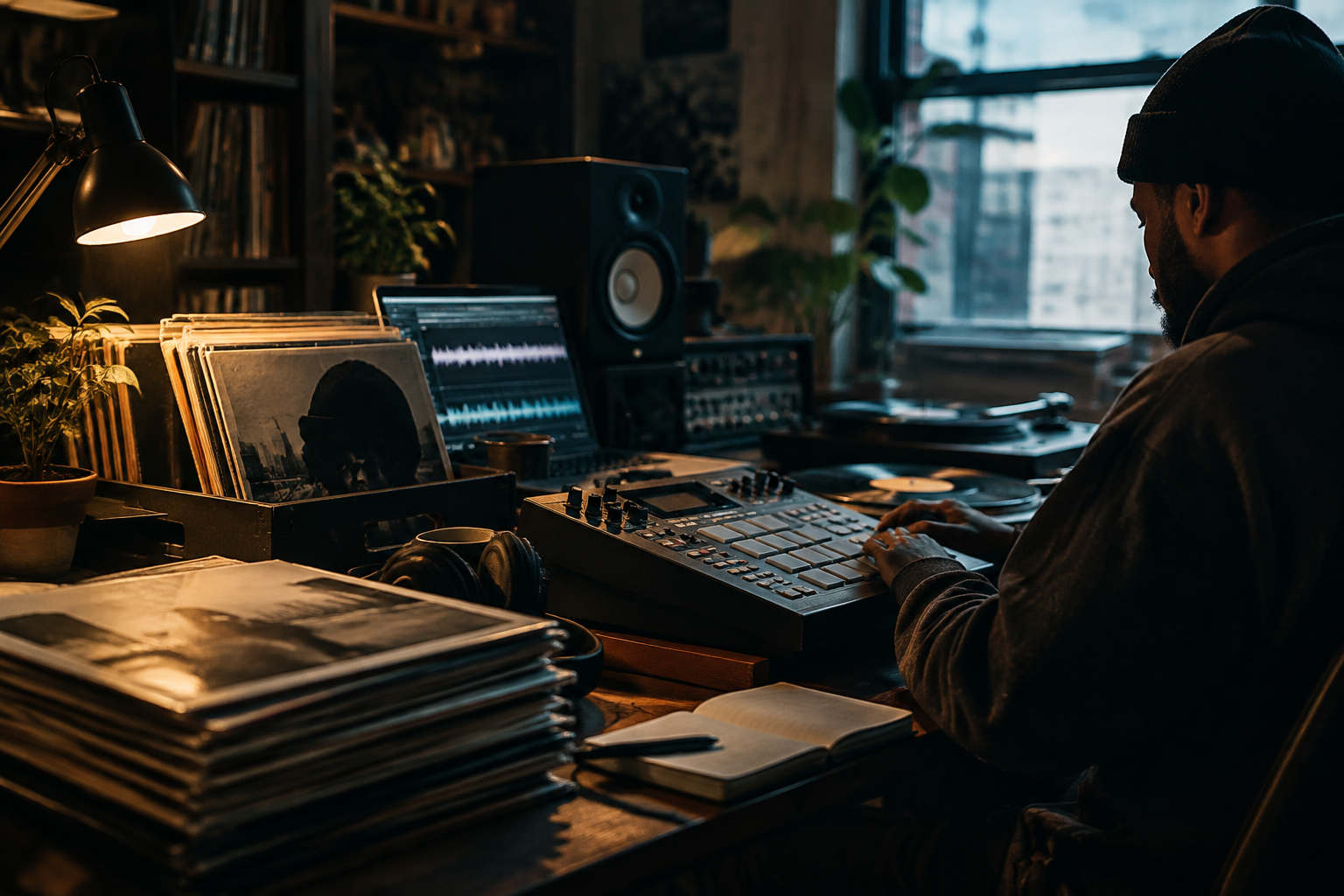
Lo-fi and boom-bap live and die on texture. A dusty snare, a tape-saturated kick, a vinyl crackle you can’t quite place: these are the ingredients that separate a beat that feels lived-in from one that sounds like a preset demo. The problem is that the sample market is flooded with packs promising “authentic warmth” that turn out to be the same 808 kick with a low-pass filter slapped on top.
I’ve dug through enough folders to know what a keeper looks like. Here’s what I actually rate, what’s free, and what I’d skip.
What separates a good lo-fi or boom-bap sample pack from filler
Three things matter more than pack size.
- Sonic character: the samples should have personality you couldn’t easily recreate with a stock drum machine. If it sounds like a default kit with reverb, it’s not worth the disk space.
- Mix-readiness: you want to drop a break in and have it sit without heavy EQ. Good packs ship hits that are already shaped, not raw one-shots you have to wrestle into a groove.
- Royalty-free licensing: non-negotiable for anything you’re releasing commercially.
A smaller, curated pack you actually use beats a 10 GB dump gathering dust. That’s the test I apply to everything below.
Free packs worth downloading first
Samplephonics 513 Free Tube Drum Samples
This one is a genuine gift. Samplephonics originally planned to make around 80 tube-processed drum samples and ended up with over 500 individual hits, all run through analogue saturation gear. The result is a grabbed-from-the-desk texture that’s exactly right for boom-bap and lo-fi hip-hop.
What you get: 24-bit WAV files plus instrument patches for the major sampler formats. That means Kontakt, Ableton Sampler, Reason NN-XT, and SFZ are all covered, so you can load the sounds mapped across your MIDI keyboard and play them chromatically instead of dragging one-shots into a timeline. The SFZ support is a nice touch when so many free packs ignore it.
One honest caveat: I don’t like every hit in the pack. Some of the saturated snares land harsh and metallic, and I end up reaching for the softer ones. But the keepers are genuinely great, and there are enough of them that the pack earns its place in the folder. The download is small, and you only need a free Samplephonics account to grab it.
If you produce hip-hop, this is the first thing I’d download.
Where free packs usually go wrong
Most free drum packs fail on two fronts: they’re either thinly disguised demos for a paid product, or they’re dumping grounds of unprocessed one-shots that need so much work you might as well have recorded them yourself. Tube Drums avoids both because the sound design is already done and the character is baked in.
The trade-off with any free pack is volume. You get fewer velocity layers and less variety of articulations than a paid library. For lo-fi and boom-bap, that’s usually fine. You’re not scoring a film, you’re building a groove.
The texture packs: tape, radio, and noise
Lo-fi isn’t just about drums. It’s about the atmosphere hanging behind them. This is where dedicated texture packs earn their keep.
Kedr Audio’s Ultimate Experimental Producer Bundle bundles four collections that are worth knowing about individually:
- Magnetophon (1.27 GB): analog tape playback sounds recorded with vintage gear specifically for a lo-fi aesthetic. This is the most directly useful of the four for lo-fi producers. Tape hiss, wow and flutter, playback artifacts: everything that sells the “recorded to cassette” illusion without you having to run your master through actual tape.
- Radio Nomad (1.26 GB): gritty radio textures and shortwave transmissions. Very specific. If you’re making UFO or conspiracy-theory material it’s spot on, but for straight boom-bap you’ll probably only grab a handful of one-shots.
- Radiomorph (6.55 GB): shortwave radio effects for atmosphere and sci-fi sounds. Basically a noisier, more chaotic version of Radio Nomad. Enormous. Genuinely useful if you want dissonant beds under a beat, but it’s the least essential of the four for most hip-hop producers.
- Vibrations (5.6 GB): textures and impacts created using contact mics to capture the resonances of solid objects. It sounds like the effects you’d hear in a Fallout game. Percussive, physical, and surprisingly good for adding organic thumps and metallic ring to a drum pattern.
The bundle has been discounted heavily in the past, well under what the individual packs cost separately. For the tape sounds alone it’s worth a look, though be aware that two of the four packs are narrow-purpose and you may not touch them.
What to actually look for when browsing
Sample libraries split into a few categories, and knowing which one you’re buying saves you from mismatched expectations.
All-in-one libraries give you broad coverage when you’re building a toolkit from scratch. Section-specific libraries go deep on one instrument family with proper velocity layers and key switches. Loop and phrase libraries are pre-made musical ideas you chop and flip. Playable instruments give you chromatic, MIDI-triggered sounds that blur the line between sample pack and virtual instrument.
For lo-fi and boom-bap specifically, my priority order is:
- Drum one-shots and breaks: the backbone. Saturated, tape-processed, slightly off-grid.
- Tape and vinyl textures: for the atmosphere layer behind the drums.
- Chromatic instrument patches: Rhodes, upright bass, dusty keys. Playable is better than looped here, because you want to write your own changes.
- Loop libraries: last priority. Chops sound stale after a few projects, and the whole genre is built on flipping, not dropping loops wholesale.
That last point is the one a lot of beginners get wrong. Buying a giant loop library feels productive. Actually using it without three other producers using the same loop takes work.
Playable instruments versus one-shot folders
There’s a reason sample-based instrument plugins have become so central to modern workflows. Having a huge library of playable instruments built on recorded samples means you can perform parts with a MIDI keyboard instead of hunting for the right loop. For a genre where a Rhodes chord voicing or a sampled upright bass line defines the mood, that flexibility is worth more than raw quantity.
The trade-off is file size and CPU. A well-made playable instrument with multiple velocity layers and round robins can run into many gigabytes and load slowly. One-shot drum folders are instant. For lo-fi, where the whole point is a slightly rough, unpolished result, I lean on one-shots and playable keys more than full instrument libraries. I don’t need five dynamic layers of an orchestral violin. I need one Rhodes that sounds like it came off a scratched record.
Practical verdict
Start with Samplephonics 513 Free Tube Drum Samples. It costs nothing but an account, the saturation gives you the grit immediately, and the sampler patches mean you can play it rather than just drag files. That’s your drum layer handled.
Then add a tape or vinyl texture pack. Kedr Audio’s Magnetophon is the one I’d single out, with the caveat that you may want to buy it outside the bundle if the radio and contact-mic packs don’t fit your music. Tape noise is the cheapest way to make a clean beat sound like it came from a basement studio.
Skip anything over 5 GB unless you know exactly what you’ll use it for. Skip loop packs unless you have a specific chop workflow. And skip any “lo-fi essentials” mega-bundle that shows you the same kick drum you already have. The best sample pack is the one whose hits already sound like the record in your head before you’ve touched a single plugin.